Ask anyone what they remember about a wedding from five years ago and the answer is nearly always the food. Catering is 40%+ of your budget and 90% of your guests’ review — it deserves more planning than a single tasting and a handshake.
This guide covers menu architecture, live counter strategy, realistic quantities and the tasting checklist that separates good caterers from great ones.
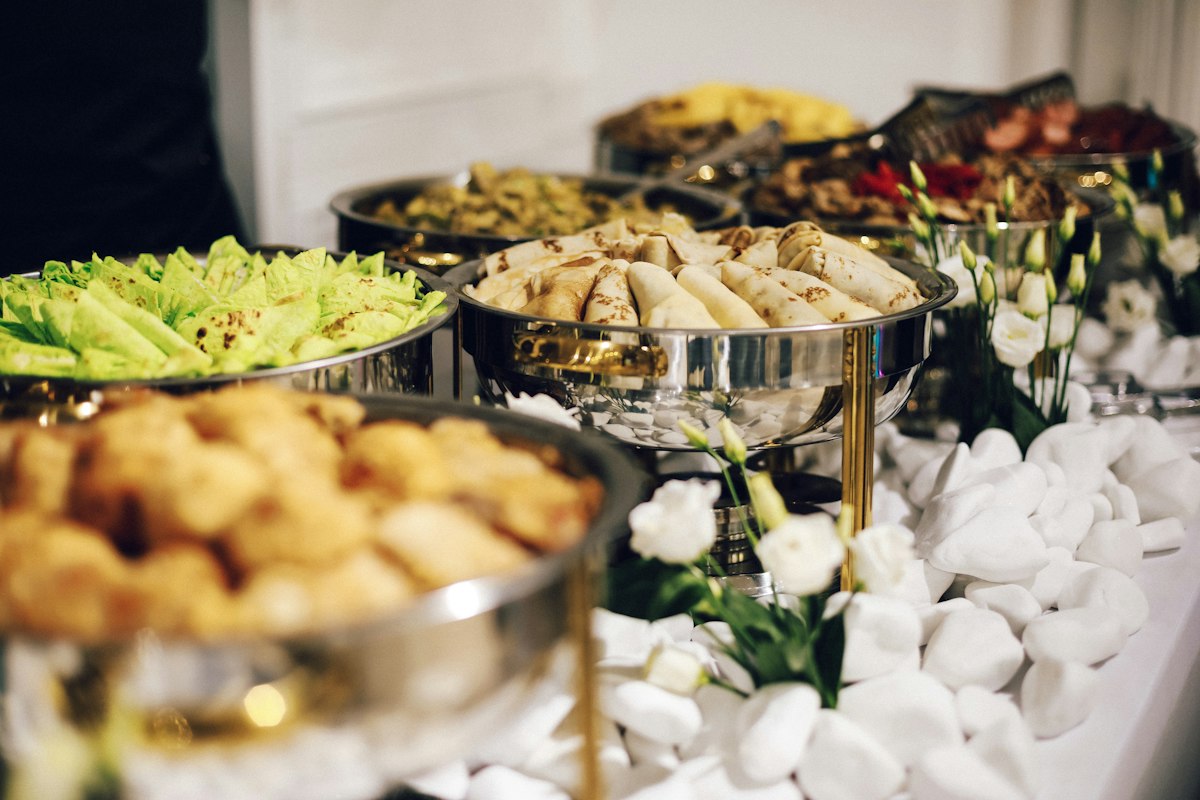
Menu Architecture: The 60-30-10 Rule
Structure every function’s menu as roughly 60% crowd-pleasing classics (dal makhani, paneer, biryani — the dishes elders judge you by), 30% regional and family-signature dishes that tell your story, and 10% surprise elements — a fusion counter, a viral dessert, one conversation-starter. This ratio satisfies every generation at the same buffet.
Live Counters Worth the Premium
Live counters cost more per plate but deliver theatre and freshness.
- Chaat and golgappa stations — the undefeated champion of every Indian wedding
- Live dosa, appam or tawa counters for breakfast and brunch functions
- Kebab grills and tandoor stations with fresh naan
- Pasta, dimsum or sushi counters for cocktail evenings
- Dessert theatre: jalebi-rabri live, nitrogen paan, kulfi carts, filter-coffee bars
How Much Food to Actually Order
Caterers quote per plate; the art is the count. Order for 85–90% of confirmed guests at dinner functions (10–15% no-show is standard), but 100%+ for lunch pheras where everyone eats. Cap the menu breadth — 4–5 mains beat 9 mediocre ones, and every added dish increases waste more than satisfaction. Confirm final counts 72 hours out and get the surplus policy (and food-donation option) in writing.
The Tasting Checklist
A tasting is an audit, not a lunch.
- Taste the exact dishes you are ordering, not the caterer’s showcase menu
- Check spice calibration for elderly guests and kids — ask for a mild batch demo
- Inspect serving hygiene: gloves, food covers, holding temperatures
- Ask who cooks on the day — the tasting chef or a different site team?
- Confirm crockery quality, buffet layout plan and staff-to-guest ratio (1:25 is comfortable)
Regional Fusion: The Trend With Substance
Couples from different communities are building menus that honour both — a Rajasthani dal-baati counter beside Bengali mishti, or a Kerala sadya lunch with Punjabi evening mains. Label counters with the family story (‘Nani’s recipe’) and food becomes the most personal decor at the wedding.
Frequently Asked Questions
How much does wedding catering cost per plate in India?
Standard vegetarian wedding menus run ₹800–1,500 per plate, premium multi-cuisine menus ₹1,500–2,500, and luxury menus with live counters and imported ingredients ₹2,500–4,000+, varying significantly by city.
How many dishes should an Indian wedding menu have?
A well-balanced dinner menu needs 4–6 starters, 4–5 mains, 2–3 breads, 1–2 rice dishes, and 3–4 desserts. Fewer, excellent dishes consistently outperform sprawling menus in guest satisfaction and waste reduction.
Should I order food for all confirmed guests?
Order for 85–90% of confirmed guests at evening functions, as 10–15% no-shows are standard at Indian weddings. For lunch ceremonies where attendance is near-total, order for the full count plus a small buffer.
Final Thoughts
Great wedding food is architecture: classics for comfort, heritage for meaning, one surprise for delight. Avsar Eventz manages catering end-to-end — tastings, counts, counter design and day-of quality checks — with vetted caterers in every budget tier.
Written by Mayuri Patel for avsareventz.com/ — your partner in modern Indian wedding planning.