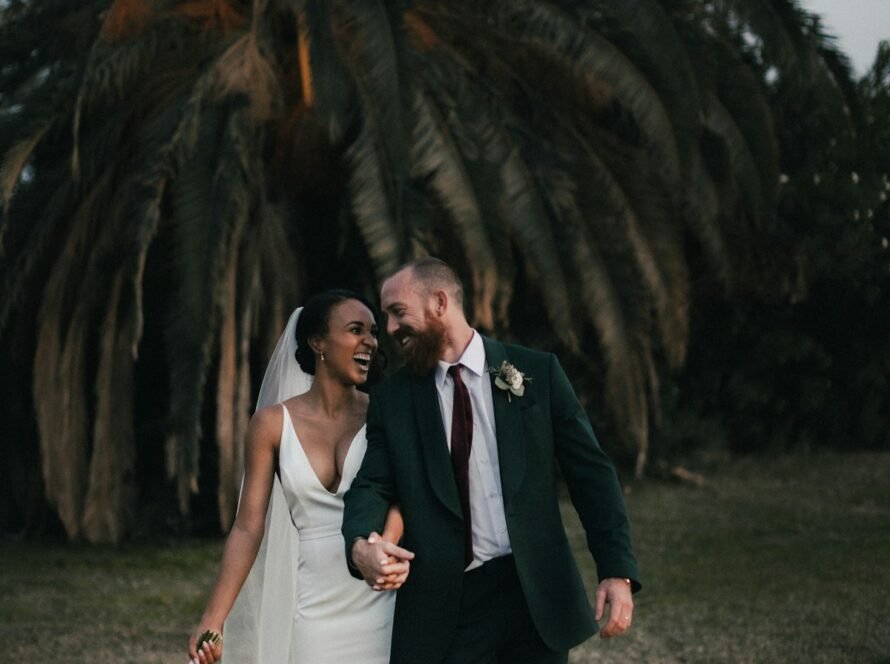
Every fusion wedding answers the same beautiful question: how do two families, two cuisines, two playlists and sometimes two faiths become one celebration without either side feeling like a guest at their own child’s wedding?
Whether you are blending Punjabi and Tamil, Gujarati and Bengali, or Indian and Western traditions, this guide offers structures that honour both sides — and the diplomacy tactics that keep planning joyful.

Choose Your Ceremony Structure First
Three formats work reliably: dual full ceremonies (two complete rituals on consecutive days or a morning-evening split — the most traditional-family-friendly option), a single blended ceremony where a willing officiant weaves both traditions’ key rituals into one sequence, or ceremony-plus-reception, where one tradition hosts the ceremony and the other leads the reception’s style, food and customs. Decide this before booking anything, because it drives venue, dates and budget.
Food: The Easiest Win
Cuisine is where fusion delights instead of divides. Run parallel regional counters with family labels (‘Amma’s Chettinad corner’, ‘Dadi’s chole recipe’), open with one side’s traditional welcome drink and close with the other’s signature dessert, and let each family champion its own menu with the caterer. Guests treat a two-cuisine wedding as a festival, not a compromise.
Outfits and Style Diplomacy
Popular approaches that photograph beautifully:
- Outfit changes honouring each side — a Kanjivaram for the muhurtham, a lehenga for the evening
- Blended details: one tradition’s silhouette in the other’s textile or draping style
- Guests given flexible dress codes per function so both communities feel at home
- Coordinated couple palettes that bridge both traditions’ signature colours
- Heirloom exchange: wearing a piece of jewellery or fabric from the other family
Music, Rituals and the Small Stuff
Alternate musical traditions across functions — nadaswaram at the morning ceremony, dhol at the evening entry — and brief the DJ with a genuinely 50-50 playlist. For rituals, have an elder or the officiant briefly explain each custom’s meaning to the other side; two-line explanations on the wedding website or program card turn confusion into connection. Bilingual invitations and signage cost little and mean much.
The Planning Diplomacy Playbook
Assign one decision-owner per family for daily calls, keep a shared document listing each tradition’s non-negotiables (usually shorter than feared), split hosting credit visibly on invites and announcements, and when a conflict has no compromise — hold both versions. Two varmala moments cost ten extra minutes and buy permanent goodwill.
Frequently Asked Questions
How do you plan a wedding with two different cultures?
Choose a ceremony structure first — dual ceremonies, one blended ceremony, or ceremony-plus-reception split — then assign one decision-owner per family, list each side’s non-negotiable rituals, and blend food, music and outfits function by function.
Can you have two wedding ceremonies in one day?
Yes — a morning ceremony in one tradition and an evening ceremony in the other is a common fusion format. Keep 4–5 hours between them for outfit changes, meals and rest, and confirm the venue supports both setups.
How do fusion weddings handle two religions?
Many couples hold both religious ceremonies separately with willing officiants, or a blended ceremony incorporating key rituals from each faith. Early, respectful conversations with officiants and elders on both sides determine what is possible.
Final Thoughts
A fusion wedding done well is not half of each tradition — it is all of both. Avsar Eventz has planned intercultural and interfaith weddings across communities, and we know exactly which rituals need their own moment and which blend beautifully.
Written by Mayuri Patel for avsareventz.com/ — your partner in modern Indian wedding planning.